Trapped Between War and Survival: A Gaza Man’s Year-Long Medical Ordeal
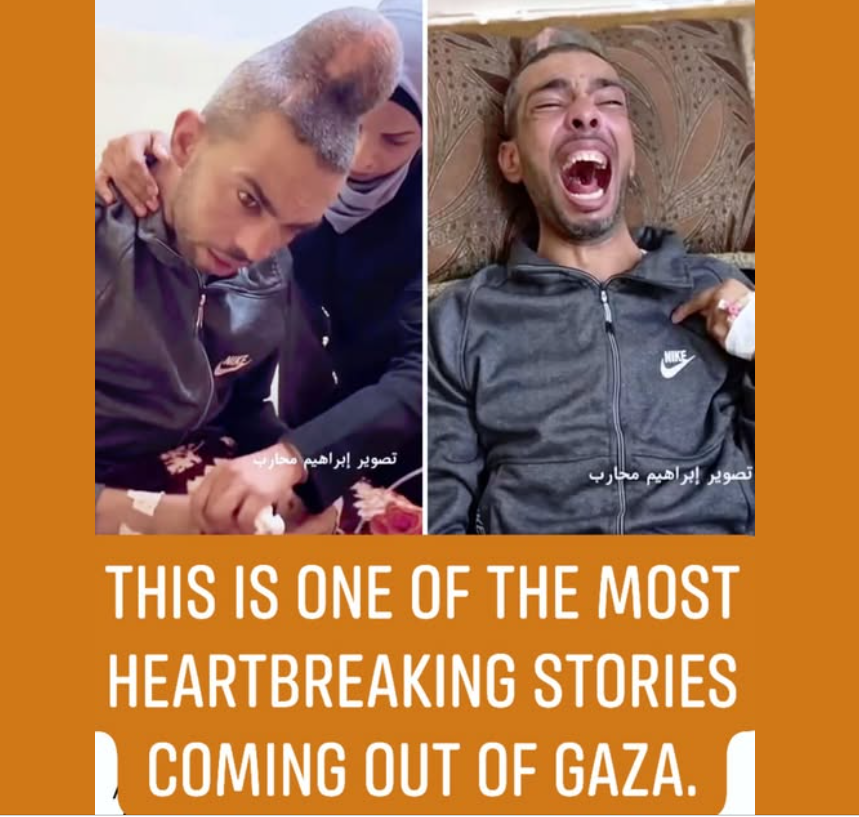
Lifeinmena- In the war-torn enclave of Gaza Strip, where humanitarian conditions continue to deteriorate under prolonged conflict and blockade, the story of 37-year-old Raed al-Mureidi has emerged as a stark illustration of the human cost of limited access to both food and healthcare.
Trapped Between War and Survival: A Gaza Man’s Year-Long Medical Ordeal
For nearly nine months, al-Mureidi has remained trapped in a worsening medical crisis after sustaining a catastrophic head injury. According to accounts from family members and local sources, he was shot while attempting to secure food for his family at a distribution point reportedly coordinated under joint U.S. and Israeli oversight. Such sites, increasingly described by residents as dangerous and unpredictable, have become focal points of desperation for civilians facing severe shortages.
The gunshot wound fractured al-Mureidi’s skull, leaving him paralyzed and unable to speak. Since the incident, his condition has progressively deteriorated. Medical observers report that a mass has begun forming inside his head—likely a complication requiring urgent surgical intervention. However, the collapse of healthcare infrastructure across Gaza has rendered such procedures impossible within the territory.
Hospitals in the Gaza Strip, already strained by years of limited resources, have been pushed beyond capacity amid ongoing hostilities. Shortages of essential medical supplies, electricity, and specialized personnel have made complex surgeries unattainable for many patients like al-Mureidi.
Efforts to transfer him abroad for treatment have so far failed. For months, his family has sought permission for medical evacuation, a process that requires approval from Israeli authorities. According to those close to the case, these requests have been repeatedly denied, leaving al-Mureidi without viable options for life-saving care.
His situation reflects a broader crisis affecting thousands across Gaza. With strict movement restrictions and a fragile humanitarian corridor, many critically ill patients are unable to access treatment outside the territory. At the same time, ongoing shortages of food and basic necessities continue to push civilians into dangerous situations as they attempt to survive.
Human rights organizations and international observers have raised concerns about the compounding effects of restricted mobility, limited aid access, and the targeting—or endangerment—of civilians in high-risk zones. The circumstances surrounding aid distribution points, in particular, have drawn scrutiny as desperate populations gather under increasingly precarious conditions.
Today, Raed al-Mureidi’s case stands as more than an individual tragedy. It underscores the intersection of conflict, healthcare collapse, and humanitarian access in the Gaza Strip—a place where survival itself has become fraught with life-threatening risks.
As the conflict continues with no immediate resolution in sight, stories like his highlight the urgent need for expanded medical access, protected humanitarian pathways, and sustained international attention to the civilian toll of war.