How to Trade Forex?
How to Trade Forex?
Now that you’re familiar with the basic concepts, let’s move forward with the practical steps of trading in the Forex market.
1. Select a Currency Pair
How to Trade Forex
When trading Forex, you always buy one currency while selling another at the same time—hence, trades are conducted in **currency pairs**. Most beginners start with the **major currency pairs** (like EUR/USD or GBP/USD), which are widely traded and typically have lower spreads. However, you’re free to choose any pair available on your trading platform, provided you have sufficient funds in your account.
2. Analyze the Market
Smart trading begins with solid research.** The Forex market is full of information—economic indicators, political news, and technical charts. While this may seem overwhelming at first, your focus should be on finding trustworthy resources that provide clear insights into the behavior of your selected currency pair. Over time, patterns will emerge, and you’ll learn to identify what really matters in your analysis.
3. Read the Quote
A currency quote typically shows **two prices
The **bid** price: the rate at which you can **sell** the base currency.
The **ask** price: the rate at which you can **buy** the base currency.
The **difference** between these two rates is known as the **spread**, and it’s essentially the broker’s fee. You can monitor live spreads on most trading platforms.
4. Pick Your Position
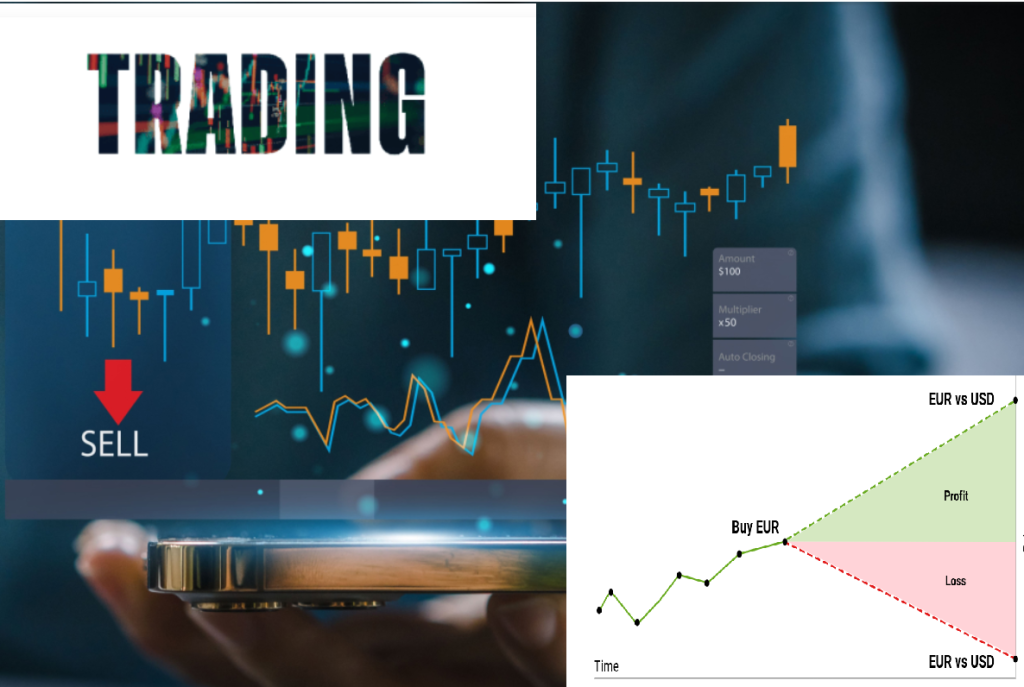
In Forex trading, you can profit whether the market rises or falls—**depending on your position:
uy (Long) Position**: You expect the base currency to rise in value against the quote currency.
Example: Buying EUR/USD means you believe the euro will strengthen against the US dollar.*
Sell (Short) Position**: You expect the base currency to fall in value against the quote currency.
*Example: Selling EUR/USD means you believe the euro will weaken against the US dollar.*
Learn Trading with IFC Markets
* 🎥 **Video Tutorials for Beginners
* 🧑🏫 **IFCM Trading Academy**
* 📚 **Educational Books & Glossary
History of the Forex Market
The development of the modern Forex market is deeply rooted in two major historical events:
1. The Gold Standard System (1875)**
Under this system, currencies were backed by a specific amount of gold. Each country defined its currency in terms of gold value, and exchange rates were fixed based on those definitions. This was the **first standardized method** of currency exchange. However, World War I disrupted the system, as nations needed more flexibility in their monetary policies.
2. The Bretton Woods System (1944–1971)
In 1944, representatives from 44 Allied nations gathered in **Bretton Woods, New Hampshire**, to create a new international monetary framework. The U.S. dollar was pegged to gold at **\$35 per ounce**, and other currencies were pegged to the U.S. dollar. This made the USD the world’s primary **reserve currency
The system collapsed in 1971 when the U.S. suspended the convertibility of dollars to gold due to depleted reserves. This marked the end of fixed exchange rates and led to the **modern Forex market**, with **floating exchange rates** determined by market forces.
Forex Market Hours
The Forex market operates **24 hours a day, five days a week**, with trading sessions overlapping across major global financial centers.
No fixed time frames:** Ideal for people with varied schedules.
Trading continues** as one market closes and another opens.
Liquidity (and spreads) varies depending on active regions.
For example, JPY pairs tend to be most active during **Asian hours
Major Market Sessions (High Liquidity)
| Session | Opens (GMT) | Closes (GMT) |
| —————- | ———– | ———— |
| Tokyo (Asia) | 00:00 | 09:00 |
| London (Europe) | 08:00 | 17:00 |
| New York (US) | 13:00 | 22:00 |
| Sydney (Oceania) | 22:00 | 07:00 |
These overlapping hours, especially **London-New York** (13:00–17:00 GMT), often provide the **highest trading volume** and lowest spreads